

For decades, the annual holiday followed a familiar formula: two weeks away, months of planning and a substantial portion of the year’s holiday allowance used in one go. That traditional escape still has its place, but it is no longer the only model available to travellers seeking a meaningful break.
Increasingly, a Friday-to-Sunday getaway or two carefully chosen days during the week is becoming an attractive alternative. The 48-hour micro-break requires less planning, can be easier to budget for and allows people to experience a genuine change of scenery without disappearing from everyday life for a fortnight.
This does not mean that travellers are abandoning longer holidays entirely. Instead, many are spreading their leisure time across several smaller adventures, making travel a more regular part of the year rather than a single distant reward.
Why Shorter Breaks Fit Modern Life
The appeal of the micro-break begins with its simplicity. Securing two weeks away from work can involve arranging cover, clearing deadlines and returning to an intimidating backlog. Family responsibilities, changing work patterns and rising travel costs can make extended holidays difficult to organise.
A 48-hour break creates far less disruption. Travellers can leave after work on Friday, wake up somewhere new on Saturday and return on Sunday evening. Those with flexible schedules may find that a midweek escape offers lower accommodation prices and quieter attractions.
The financial commitment can also feel more manageable. Although a weekend away is not automatically cheap, reducing the number of hotel nights and choosing a destination closer to home can make spontaneous travel more realistic.
Current domestic tourism figures demonstrate the enduring scale of short-distance travel. According to VisitBritain’s latest annual results, British residents made 87 million overnight trips in England during 2025. Large towns and cities accounted for 51% of those trips, while the proportion involving a hotel stay increased to 40%.
The data does not isolate trips lasting exactly 48 hours, but it shows why compact city and regional escapes fit naturally into the UK travel market.
Can Two Days Really Help You Recharge?
A weekend away cannot guarantee the same experience as a long holiday, but it can still provide valuable distance from everyday routines.
Research into short holidays offers some encouragement. A study examining a four-night vacation and its effects on stress and wellbeing found improvements among participants, including those who stayed away from home and those who took time off locally. Separate research into four-to-five-day holidays also recorded improvements in employee health and wellbeing, although some benefits faded after people returned to work.
These studies do not prove that 48 hours is equivalent to a fortnight away. They do suggest, however, that a break does not need to last for weeks before it becomes worthwhile. Detaching from work, having control over your time and doing something genuinely enjoyable may matter as much as squeezing extra days into the itinerary.
The most restorative micro-breaks therefore have boundaries. Constantly checking emails or trying to complete an exhausting sightseeing schedule can reproduce the same pressure travellers are trying to escape.
Rediscovering Destinations Closer to Home
With only two days available, spending most of the break in transit makes little sense. That encourages travellers to look at places reachable within a few hours of home and the British Isles provide no shortage of possibilities.
A historic city such as York, Bath or Edinburgh can offer enough architecture, food and culture for a rewarding weekend without requiring an overloaded schedule. Coastal towns, national parks and countryside retreats provide a quieter alternative for those seeking space rather than sightseeing.
The key is to match the destination to the available travel time. A trip from London will present different possibilities from one beginning in Manchester, Glasgow or Cardiff, so proximity should matter more than following a generic list of fashionable weekend locations.
Travellers seeking nature could use a focused itinerary for a long weekend in the Lake District, while quieter coastal exploration might begin with one of these Scottish villages worth the journey. Seasonal destinations work particularly well too, with autumn bringing a more atmospheric character to a short break in the Cotswolds.

How to Plan a Micro-Break Without Overplanning It
The most common mistake is treating a two-day escape as a compressed two-week holiday. Attempting to visit every museum, landmark and restaurant creates an itinerary ruled by the clock.
A better approach is to choose one purpose for the trip. That might be a coastal walk, a spa stay, a food-focused city break or a weekend built around a concert or exhibition. Once the main experience is decided, everything else can remain flexible.
Accommodation location matters more than usual. Saving a small amount on a hotel far outside the centre may prove poor value if it adds repeated journeys to an already short visit. Staying close to the station, main attraction or chosen neighbourhood can return several useful hours to the weekend.
Travelling light also helps. A small weekend bag makes it easier to move directly from the station to lunch, sightseeing or a walk without waiting to check in. Booking one important restaurant or attraction in advance provides structure, while leaving the rest of the schedule open allows room for unexpected discoveries.
The European City Break, Reconsidered
A 48-hour escape does not have to remain within the UK. Direct rail and flight connections make parts of continental Europe realistic for a weekend, particularly when departure times minimise the working day lost to travel.
Paris, Lille, Brussels and Amsterdam can work well for travellers with convenient access to London and the Eurostar network. Dublin, Copenhagen and other compact cities may also suit a short stay when flight times and airport transfers are sensible.
However, the cheapest fare is not always the most efficient option. An early flight from a distant airport can require an overnight hotel, while lengthy security queues and transfers can consume a large portion of the break. Door-to-door travel time is a better measure than the advertised flight duration.
Travellers should also check current entry requirements through the UK Government’s foreign travel advice before booking, even for a brief European trip.
Making Frequent Travel More Responsible
A micro-break is not automatically sustainable. Taking frequent flights may create a greater environmental impact than one longer holiday, even when each individual trip lasts only two days.
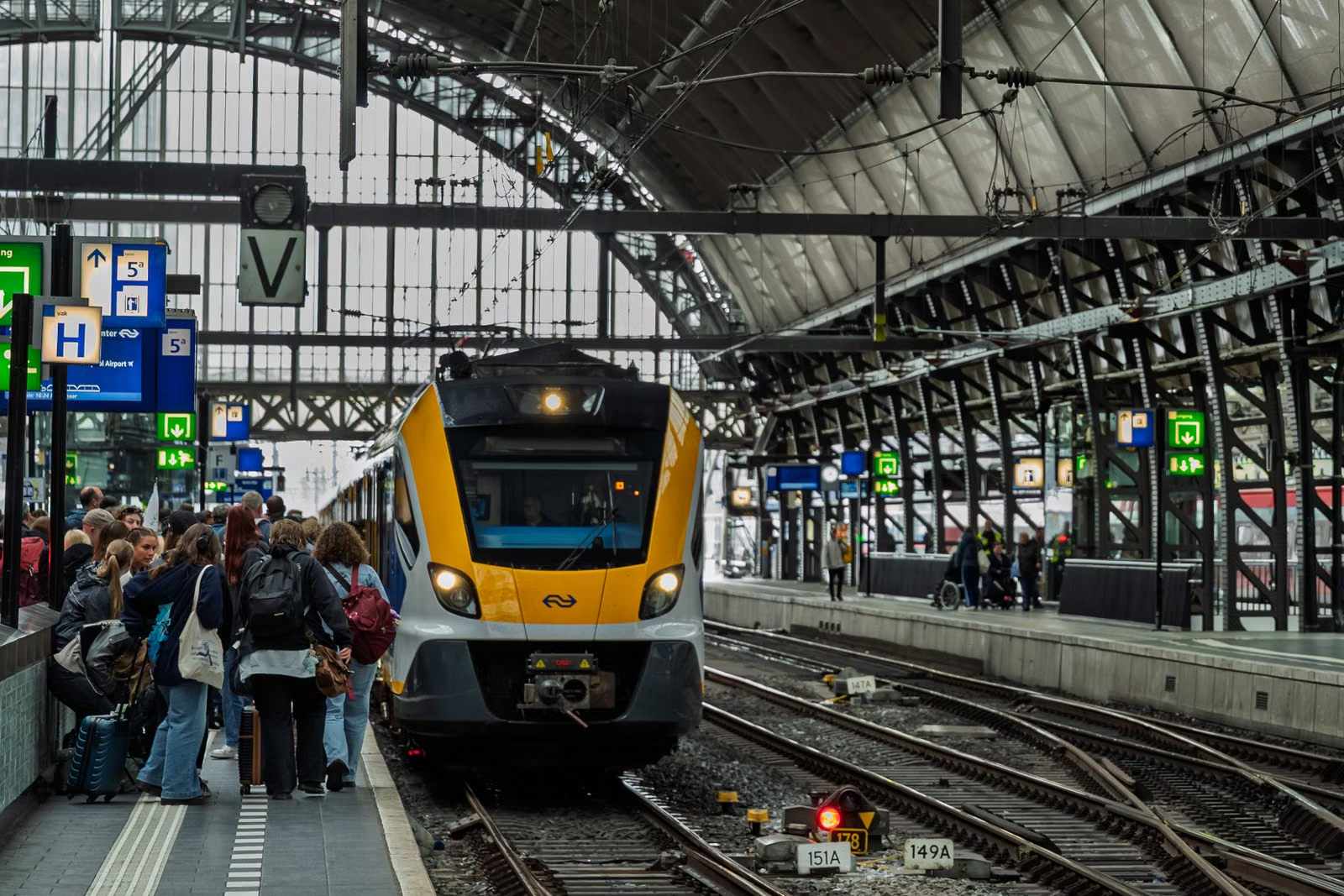
Choosing rail travel, exploring closer to home and staying with independent accommodation providers can make the model more responsible. Spending in local cafés, restaurants and shops also allows regional communities to benefit from visitor income outside the traditional summer peak.
Travelling outside the busiest periods can reduce pressure on crowded destinations while providing a calmer experience. The best micro-break is often not the one that covers the greatest distance, but the one that uses its limited time most thoughtfully.
A Different Way to Value Time Away
The 48-hour micro-break is not a replacement for the long summer holiday. It is a complementary way to travel—one that values frequency, flexibility and focused experiences.
Two days will never be enough to see everything, but that is precisely the point. A successful micro-break is not measured by the number of attractions completed. It is measured by whether the traveller returns feeling that, briefly, everyday life became wider, slower or simply more interesting.
By choosing destinations carefully and resisting the urge to overfill every hour, a single weekend can become far more than a gap between working weeks.










.svg)