

A rush-hour carriage can make even a short journey feel draining. On the London Underground, a regional bus or a busy National Rail service, there is a constant mix of rumble, screech, announcements and conversation. The best noise-cancelling headphones for commuting will not create total silence, but they can make podcasts clearer, calls easier to follow and music more enjoyable at a more comfortable volume.
The winning pair is not necessarily the most expensive one. It is the pair that fits securely, works reliably from platform to office and lets you hear the world again when you need to.
What active noise cancellation really does
Active noise cancellation (ANC) uses microphones to listen to surrounding sound and produce an opposing signal that reduces what reaches your ears. Apple’s UK explanation of ANC and Transparency mode gives a clear overview of the principle.
On public transport, the effect is most obvious against the steady hum of a train, bus or air-conditioning system. Sudden voices, sharp announcements and the occasional screech will still come through. The aim is a calmer background, not an unrealistic promise of complete silence.
Some models adjust their noise control automatically as you move between street, station and carriage. It is a useful extra, but a good physical seal around the ear — or a well-fitted ear tip — matters just as much.
Are over-ear headphones or wireless earbuds better for commuting?
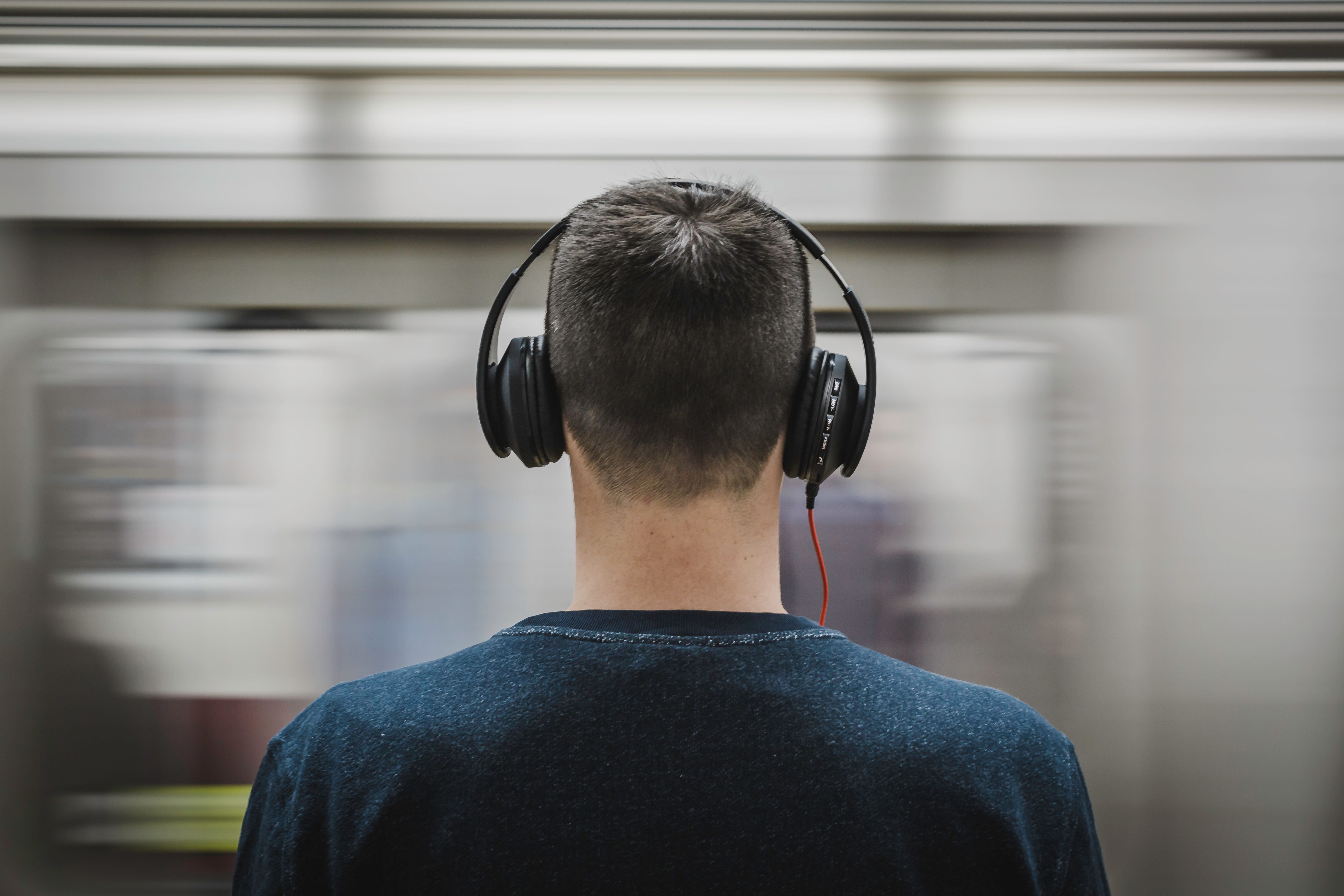
There is no single right answer. Over-ear headphones suit long rail journeys and anyone who wants a more enveloping listen. Their padded earcups provide a physical barrier to outside sound before ANC begins, but they take up more room and can feel warm on a full journey.
Wireless earbuds are lighter and disappear into a coat pocket — ideal if you walk, change trains or head straight into a meeting. Their performance relies heavily on fit, though. A loose ear tip weakens both sound quality and noise reduction, so try the supplied sizes rather than settling for the default pair.
Comfort matters more than a long feature list
The most impressive specification sheet is useless if the headphones hurt after half an hour. Check headband pressure, cushion softness and whether earbuds stay secure when you walk quickly or take a scarf on and off. If possible, try them with glasses or a winter hat — small pressure points can become painful on a longer journey.
Think about your actual route, too. A compact case, sturdy hinges and a stated water-resistance rating can be more valuable day-to-day than a niche sound setting you may never use.
Transparency mode is essential, not an afterthought
Good commuting headphones should make it easy to hear the outside world again. Transparency, ambient or awareness modes let in surrounding sound, so you can hear a platform announcement, speak to a ticket inspector or stay alert near traffic without removing your headphones.
Prioritise a simple, reliable control. A physical button can be easier to use on a crowded train or in cold weather than a touch gesture. Keep awareness mode on whenever your surroundings require it.
Battery, charging and calls: the details that decide daily use
Always compare battery figures with ANC switched on; that is the number that matters on a real commute. USB-C, a useful quick-charge option and a secure case are all worth having. If you switch between a work laptop and phone, multipoint Bluetooth can make a real difference too.
Do not overlook call quality. Look for independent tests that cover voice calls outdoors and on public transport, and check the manufacturer’s limits before relying on any pair in heavy rain.

A quick checklist before you buy
- Does the quoted battery life include ANC being on?
- Can you turn on transparency mode in one simple action?
- Is the fit still comfortable with glasses or a hat?
- Will the case fit in the bag or pocket you actually use?
- Are the controls practical while walking or standing on a train?
Use ANC to listen more comfortably, not louder
Noise-cancelling headphones can reduce the temptation to keep turning up the volume in a noisy carriage. WHO safe-listening advice recommends well-fitted noise-cancelling headphones and sensible personal-audio levels, particularly in noisy settings such as public transport.
Choose a pair that makes your normal volume feel clear enough, rather than one that encourages you to overpower the journey.
The bottom line
The best noise-cancelling headphones for a UK commute are the ones you will happily wear every day. For long rail journeys, comfortable over-ear headphones with dependable transparency mode are hard to beat. For shorter, more mobile routes, well-fitting wireless earbuds may be more practical.
Focus on fit, ANC in steady transport noise, quick access to awareness mode and realistic ANC-on battery life. Get those right and the journey between home and work can become a quieter, more enjoyable part of the day.









.svg)